
 Dr. Motiwala
 Dec 21, 2025
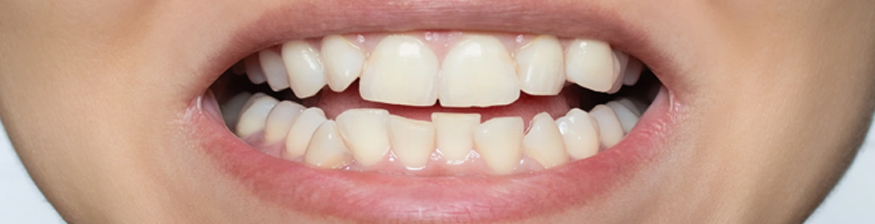
Many patients feel confused and even frustrated when teeth that were once straightened begin to shift again years after orthodontic treatment. It often feels as if the teeth have a memory of their old crooked positions. While this idea sounds poetic, there is real biology behind it. Teeth do not actually remember in the human sense, but the tissues surrounding them absolutely do. Understanding this phenomenon, known as orthodontic relapse, helps explain why retention is so important and why long-term stability requires more than braces alone.
Teeth are not fixed rigidly into the jaw like nails in wood. Each tooth sits in a dynamic environment made up of bone, periodontal ligament fibers, and surrounding gum tissue. The periodontal ligament is a microscopic but powerful structure that acts like a shock absorber, allowing teeth to move slightly during chewing. When teeth grow in crooked, these fibers adapt to that position over time.
During orthodontic treatment, braces or aligners apply controlled pressure that reshapes the surrounding bone and stretches these ligament fibers. While the tooth moves relatively quickly, the supporting tissues take much longer to fully reorganize. This delay is one of the main reasons teeth try to drift back after treatment ends.
Bone is living tissue that constantly remodels itself. When orthodontic forces move a tooth, bone is resorbed on one side and rebuilt on the other. This process is efficient, but it is not instant. After braces are removed, the newly formed bone around the tooth is softer and less dense than mature bone.
Until this bone fully hardens and stabilizes, teeth remain vulnerable to movement. Natural forces such as chewing, tongue pressure, and even subtle jaw muscle activity can push teeth back toward their original positions. This is why relapse often occurs within the first year after treatment, when bone remodeling is still incomplete.
The mouth is a muscular environment. Lips, cheeks, and tongue exert constant pressure on teeth, even at rest. Before orthodontic treatment, these muscles adapt to crooked teeth and apply forces that reinforce misalignment. After teeth are straightened, those same muscles may continue pushing in familiar directions.
This is especially true in cases involving crowding or rotated teeth. Without intervention, the balance of forces that once caused misalignment may still exist. Over time, these subtle pressures can slowly guide teeth back toward their former positions.
Retainers are often misunderstood as a temporary accessory rather than a critical phase of orthodontic care. In reality, retainers act as a protective bridge between active treatment and long-term stability. They hold teeth in place while bone and ligament fibers adapt to their new alignment.
Skipping or shortening the retention phase allows biological forces to regain control. Teeth do not relapse out of stubbornness, but because the body naturally seeks equilibrium. Retainers help establish a new equilibrium that supports straight teeth rather than crooked ones.
 |
 |
 |
For more information about the Smile Makeover in India, get in touch with Dr. Motiwala’s Dental Clinic & Implant Center at +91 99596 14584. Simply fill out the form on our CONTACT US page.


We have 100s of HAPPY ENDINGS to share with you.